
Skilled trades offer competitive wages without a four-year degree. With steady demand for people to build and maintain homes and roads, and a strong manufacturing sector, the need for skilled trades workers is expected to grow. In Kentuckiana, these jobs are a major part of the regional economy. Here’s a look at who works in the skilled trades, what they earn, and who will fill these roles next.
In a recent report, Lightcast defined the skilled trades as 135 hands-on, in-person trade occupations that don’t require a four-year degree but that do require one or more of the following:
Apprenticeship training
Certificate completion
Education up to and including an associate’s degree
Other on-the-job training and experience
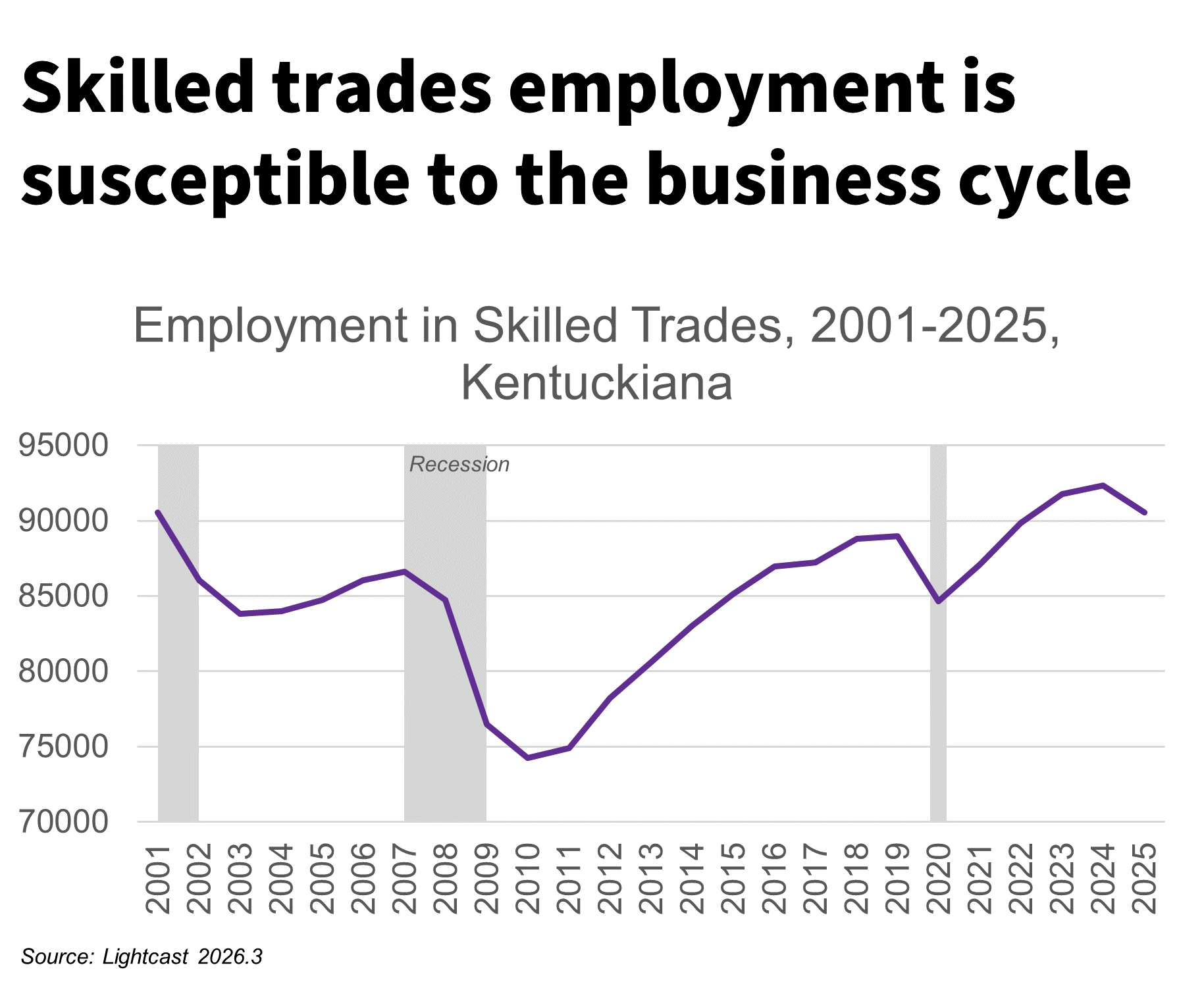
In 2025, there were more than 90,000 skilled trade jobs in the Kentuckiana region. Employment levels were up 7% in 2025 from 2020, although still below the 2023 and 2024 levels. In general, employment in the skilled trades is susceptible to the business cycle, often falling during recessions and increasing during economic recoveries.
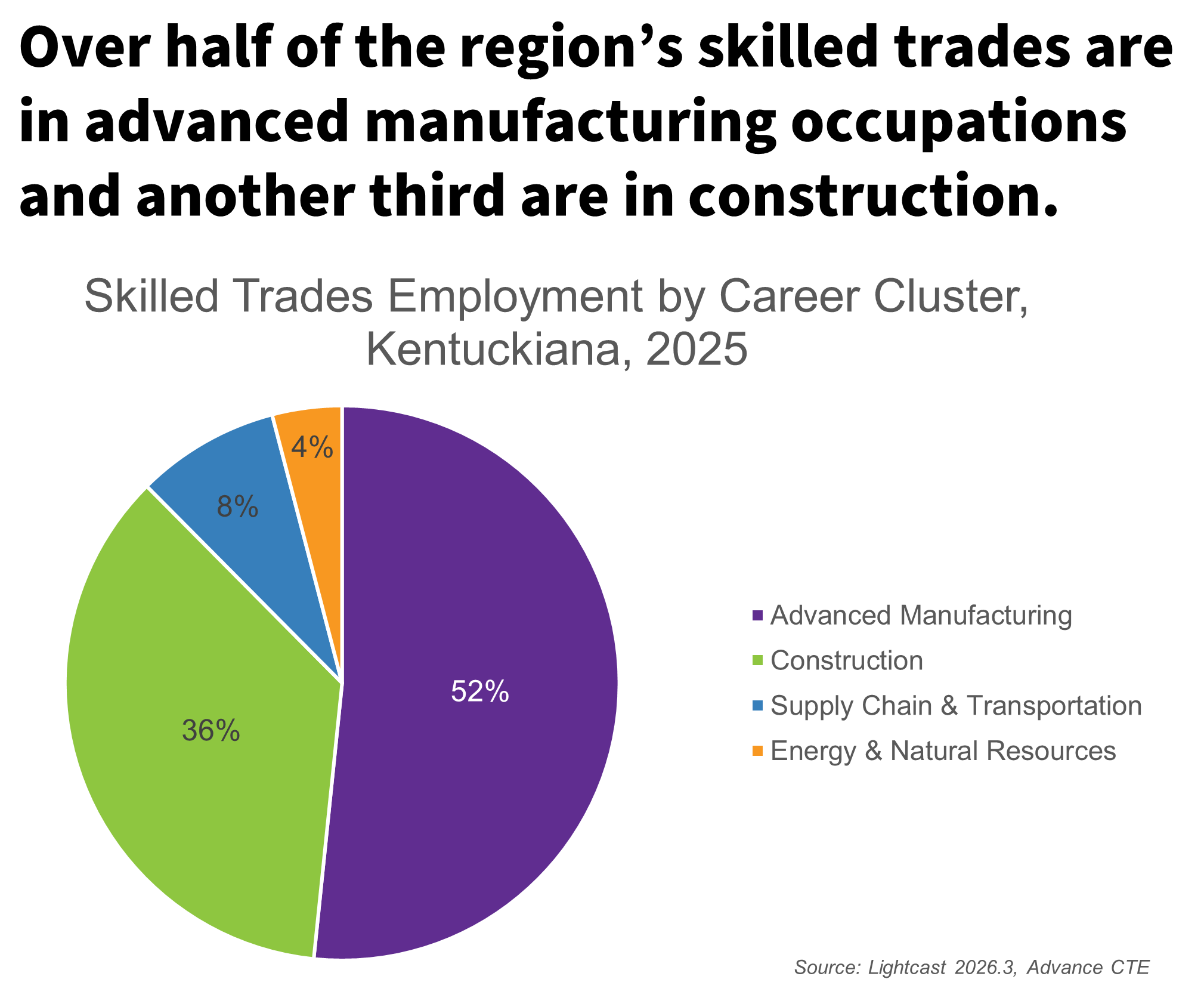
Career clusters are groups of occupations in the same field of work that require similar skills. Over half of the region’s skilled trades are in the advanced manufacturing career cluster and another third are in the construction career cluster.
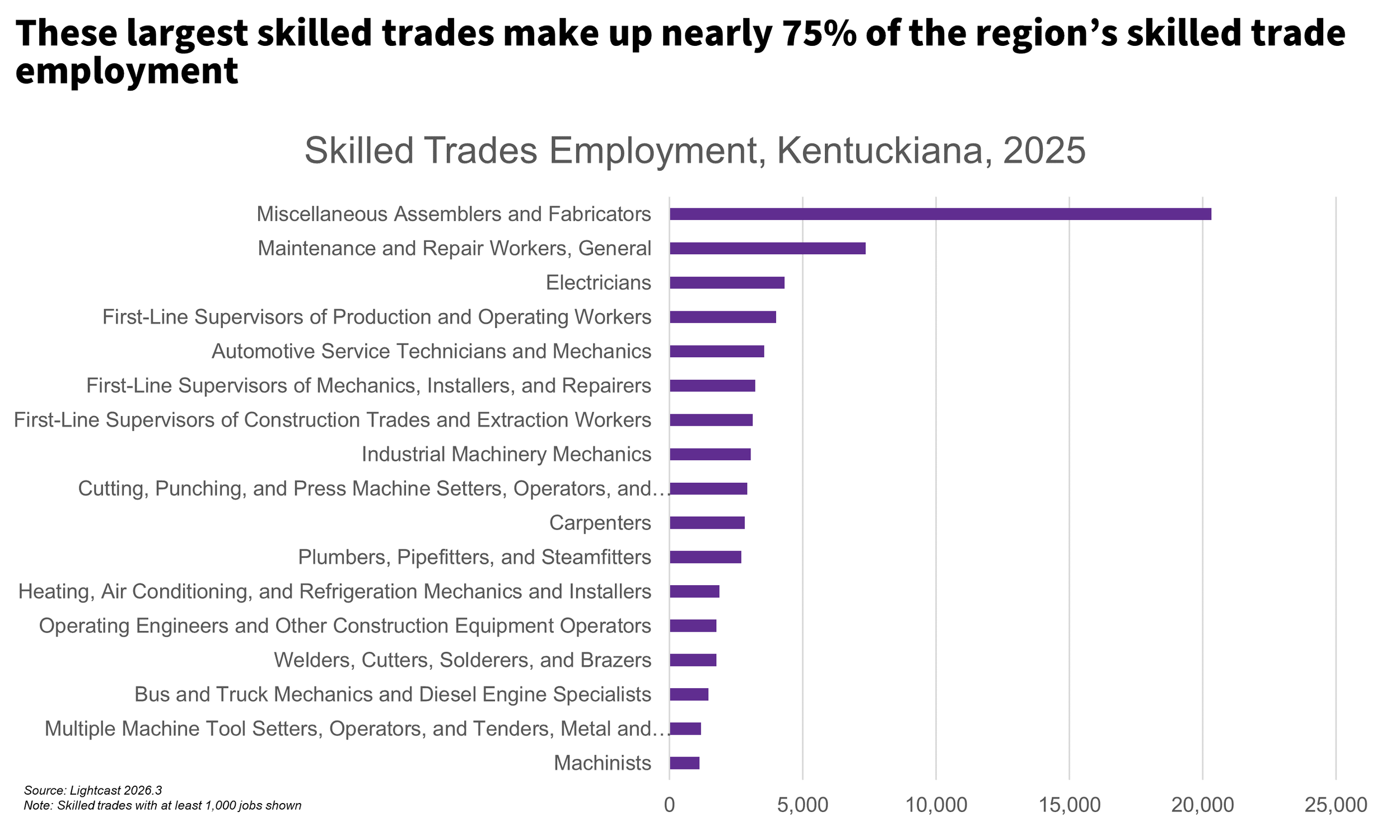
One-in-five skilled trades workers in the region is in a single occupation: miscellaneous assemblers and fabricators, commonly referred to as team assemblers, the most common position on production floors. The chart below shows the most common skilled trades in the region, with at least 1,000 workers in each occupation. Collectively, these occupations account for nearly three-fourths of the region’s skilled trade employment.
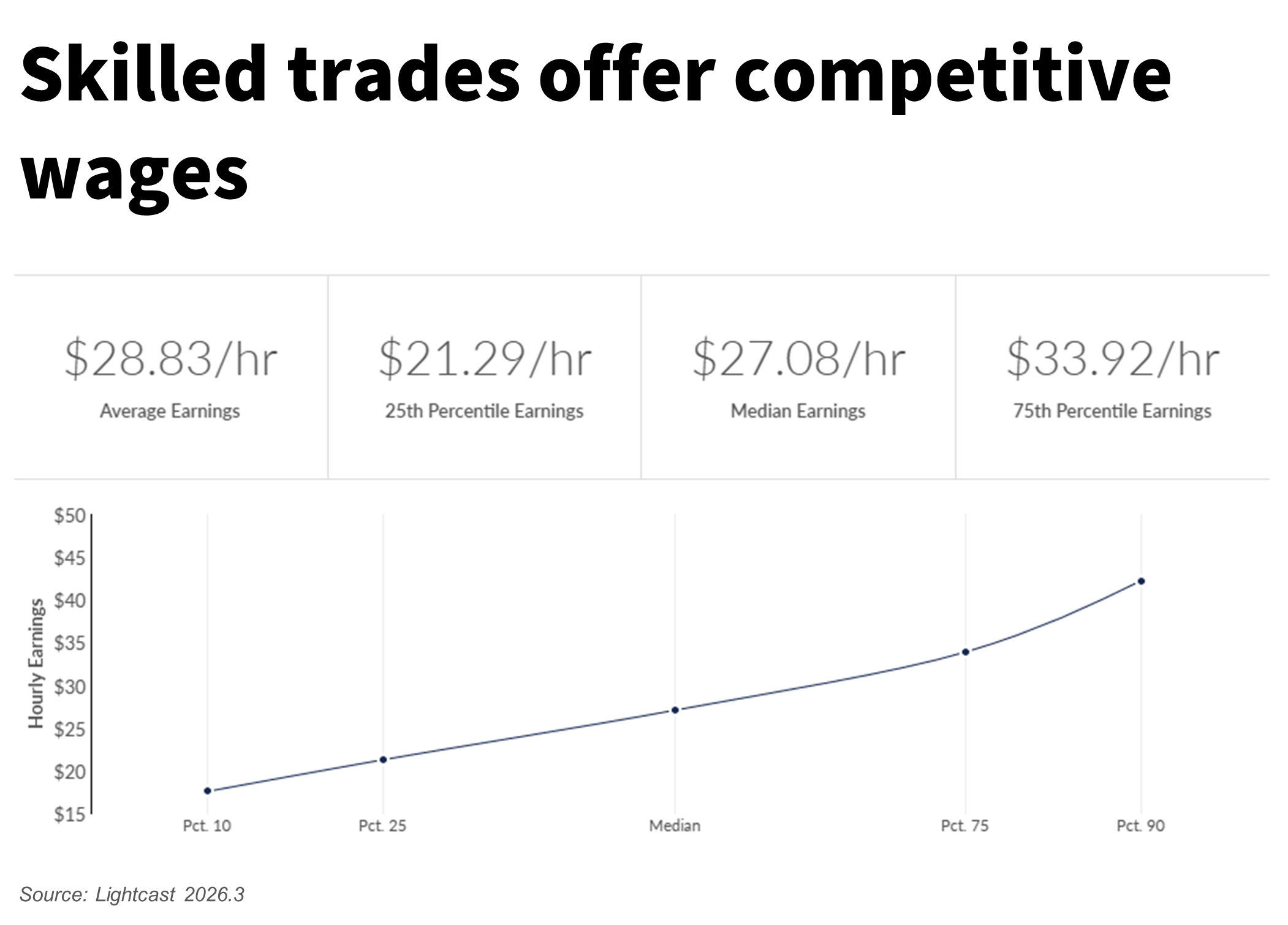
Although the skilled trades are occupations that don’t typically require a four-year degree, the wages offered in these positions are competitive. The median hourly wage across the trades is $27 per hour, more than $56,000 annually. This wage level is higher than the region’s living wage. There is variation in wages across common skilled trade occupations, with median hourly wages ranging from more than $37 per hour for electrical power-line installers and repairers to just over $22 per hour for miscellaneous assemblers and fabricators.
Nearly one-in-four skilled trades workers (24%) are ages 55 and older. In some occupations, like industrial machinery mechanics, machinists, and millwrights, more than 30% of the current workforce is ages 55 and older. With so many current workers at or near retirement age, it is critical to pay attention to the next generation of skilled trades workers.
The pipeline for new talent starts early. Career and technical education (CTE) in high school gives students hands-on learning in a dedicated field. After completing a four-course sequence, students often earn an industry-recognized credential and/or college credit. Across the region, there were more than 900 high school seniors enrolled in trade-related CTE pathways, like carpentry, CNC operator, electrical, heavy equipment sciences, HVAC, industrial maintenance, machinist, plumbing, and welding, among others.

A high school student in the JCPS Academies of Louisville gets hands-on training from the Independent Electrical Contractors (IEC) of Kentuckiana.
Kentuckiana’s skilled trades offer good wages and a path without a four-year degree, but the region will need a steady stream of new talent to keep these jobs filled. Whether through apprenticeships, paid internships, or partnerships with local CTE programs, there are many ways to get involved.
Initiatives like the Academies of Louisville Alliance connect employers with students in career pathways, and SummerWorks offers a way to give young people their first hands-on work experience. The Kentuckiana Builds training program partners with local unions to give participants an introduction to construction trades. If your organization is looking to hire skilled trades workers or build a stronger pipeline for the future, connect with our Business Services team.